Writing Assignment Option 1 (PR WRITING — COMM 3362, Monday)

Several faculty members presented at PCA/ACAS conference this past weekend.

See details below.

Your task: Create a media release for this event. Write in the style of the university. Develop an appropriate set of quotations for Dr. Tindall, one of the professors, and one of the students.

The best release will be used by the Department of Communication and Media.

*************

2018 PCAS/ACAS NEW ORLEANS CONFERENCE

2018 Conference New Orleans, LA   October 4-6

JW Marriott  New Orleans

614 Canal Street

New Orleans, LA 70130

http://pcasacas.org/dir/2018-pcasacas-new-orleans-conference/2018-conference-program-draft/

Friday 9:45 a.m. – 11:15 am

Crossing Boundaries: Time, Mortality and Psychology [ORPHEUS ROOM]

Chair: Nicki L. Michalski, Lamar University

● Revival vs. Reboot: Psychological Time Travel — Nicki L. Michalski, Lamar University

● Angels Among Us: Boundaries Between Mortal and Immortal — Mahmoud Salimi, Lamar University

● A Comparison of the Most Popular Time-Travel TV Series in English and Chinese — Qingjiang Yao,

Lamar University

● The Infinite Quality of Forgiveness — The Concept of Forgiveness in Time Travel Films — O’Brien

Stanley, Lamar University

Friday, 1:15 p.m.-2:45 p.m.

Society and Film [ENDYMION ROOM]

Chair: Laszlo Fulop, The University of New Orleans

● Disney World as Promised Land in Sean Baker’s 2017 The Florida Project — Beckie Flannagan,

Francis Marion University

● Looking at the Audience: Socially Conscious Fictional Films Break the Rules — Laszlo Fulop, The

University of New Orleans

● Returning to Aztlan: How Chicano Films Have Challenged Stereotypes By Embracing Indigenous

Heritage — C.J. Delgado, Lamar University

Saturday, 10:45 a.m. – 12:15 p.m. 

S 15.6 Video Games: The Changing Frontier [BABYLON ROOM]

Chair: April Marble, Lamar University

● Grand Theft Auto V, Capitalism, and Commodification: How the Virtual Economy is Changing

Video Games — April Marble, Lamar University

Video Games and the Neo-Liberal Hero: Capitalism, Postmodernism, and American Exceptionalism –

– Aaron A. Toscano, University of North Carolina at Charlotte

● A historical look at fictional virtual reality — Chad Wilson, University of Houston

SATURDAY, 12:30 p.m. -2:00 p.m.

S 16.3 CGI, Film Analysis and Engagement [MUSES ROOM]

Chair: Barrett McDonald, Warner University

● Arrival Film Analysis — Kylee Moreland, Lamar University

● Mathematics in Movies: When Looks Are Deceiving — Barrett McDonald, Warner University

From the conference program: 

WHAT ARE POPULAR CULTURE STUDIES?

Popular Culture Studies have come to consist of those scholarly inquiries which deal with the customs, artifacts,

events, myths, language, and the like that are shared by a significant portion of a culture or sub-culture.

Some persons refer to such sharing as mass mediated. Whenever one watches TV, attends a football game, reads

advertisements, selects a soap or tire or suit, makes a grocery list, takes the kids to Disney World or to a carnival,

reads a detective novel, helps select a homecoming queen, or communicates with common gestures, he or she

participates in popular culture. When scholars study such a culture, or sub-culture, they may focus on the people who

share the attitudes, myths, languages, artifacts, or the like, or they may examine features of the culture, its history, or

the phenomenon itself.

Scholars of the popular culture find such common — some might even say trivial — matters worth serious study, for

they believe these matters reflect the values, convictions, and the patterns of thought and feeling generally dispersed

through, and approved by, a significant portion of the culture in which they occur. Some scholars may also consider

certain popular culture texts to be art, recognizing that Elizabethan drama and Victorian novels, for example, were

once considered popular culture.

WHO ARE THESE SCHOLARS?

They come from a variety of disciplines, though they need not come from academia itself. Within the national and the

PCAS regional membership are persons interested in literature, film, television, radio history, ethnic studies,

American studies, computer sciences, and some of the natural sciences. They include a wide range of young and

bright, older and accomplished — many of national reputation — as well as field professionals, such as architects,

artists, and journalists. All share a common interest in the serious study of culture and in its popular aspects.

ABOUT THE PCAS

The PCAS, organized in 1971, is among the largest, and, from the view of those who have visited several regional

meetings, the most thriving of the regional associations. Members of the organization come primarily from eleven

Southeastern states: Alabama, Arkansas, Florida, Georgia, Kentucky, Louisiana, Mississippi, North Carolina, South

Carolina, Tennessee, and Virginia. Its activities are financed by conference registration fees and sponsoring

institutional support. Young and diverse, this energetic organization has brought together scholars who share an

interest in inquiring into all sorts of mass phenomena through a wide variety of disciplines and approaches. Its

journal, Studies in Popular Culture, is now more than twenty years old, and recently added an issue devoted to

American Studies topics. Studies in American Culture is now in its tenth year and has its own editor and editorial

board. Scholars working with topics in popular culture or American culture are invited to submit

papers for consideration to the appropriate editor.

The PCAS thus offers an opportunity for the coming together of scholars from colleges, universities, community

colleges, and even from the general public, who have something worthwhile to say on matters involving mass society.

It affords these individuals an occasion for direct response to the society which produced them. The result of this

coming together has been a rich and exciting event. We welcome you and invite you to partake of the richness,

diversity, and friendship that this conference holds.
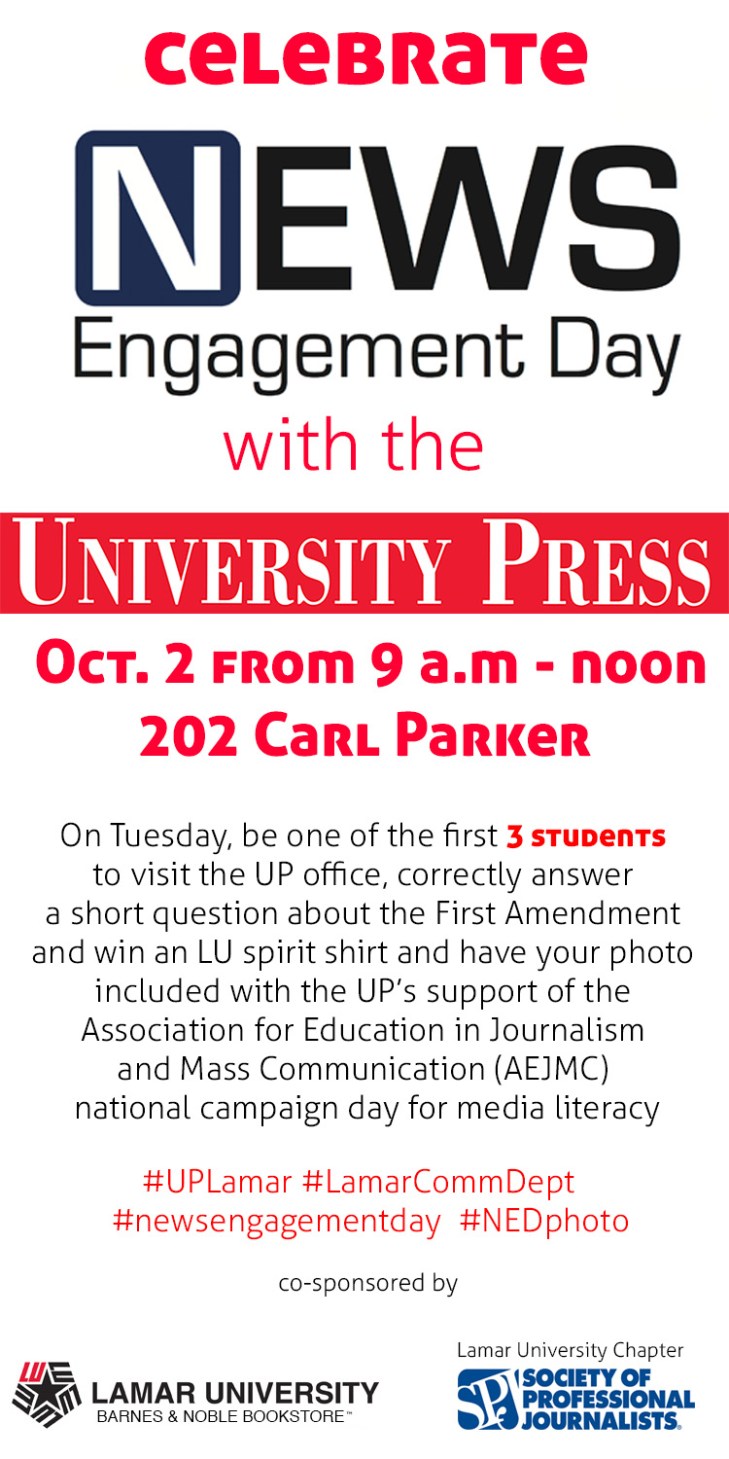
Monday’s PR Writing Class

Review the steps in Made to Stick:

Basics:

Fact sheet — Fact sheets are fact filled public relations documents, usually one to two pages in length, that provide key background information for media, targeted publics and stakeholders. Fact sheets can be:

  1. Key data at-a-glance
  2. Glossaries
  3. Directories – e.g., key contacts, office list locations, etc.
  4. Questions and answers
  5. Suggested interview questions
  6. Texts/excerpts of speeches, reports, books, articles.

News release — Should be one page. Written an inverted pyramid style.


Media alert — You prepare a media alert to notify assignment editors of a press conference, or any other event that you believe will generate news for the media to cover. It is always one page, brief but compelling, and sufficiently informative to arouse interest, usually (but not necessarily) without giving away the story. It should make clear that there are visual opportunities for TV cameras and print photographers.


Review these media releases. Which principles from Made to Stick does this follow? How can it be changed?

Develop a better way to organize this fact sheet:

Develop a media alert based on this event:

Develop a media alert based on this event:

Tuesday’s COMM 1321 class (October 2)

Assign groups for upcoming team project.

Talk about the upcoming speech: Persuasive presentation (Business Keywords 2): You will give a 4:00-6:00 presentation, in which you convince your audience of a specific solution/perspective/position related to the business keyword that you presented on previously. This presentation also requires academic research and a formal outline. This presentation also requires an audio/visual aid that is used to help your audience understand your topic. You should have at least four sources (at least 3 must be new sources) and your outline should use APA citation guidelines. This presentation should also use an appropriate organizational pattern (problem-solution, comparative advantages, criteria satisfaction, motivated sequence, or hybrid).

Go over persuasion (Chapter 09) and strategies.

https://drive.google.com/file/d/1YhtvEoobJlamEQnMGGMALOlE3vRi_uJO/view?usp=sharing

Write a persuasive outline based on the info given.

Midterm is now open. We will not have class Thursday. Mid-term is due October 8 at 11:59 p.m. Your exam can only be taken once, and you need to complete the entire exam in one sitting. I would suggest that you answer the questions in a word document and then paste the answers into the text boxes.

PR Wrting Class Notes (Monday, Sept. 24)

Class, I apologize in advance, but I won’t be able to hold class today. 

Please read do the following assignments: 

a. Answer this Discussion Board in the textbook: Who do you consider a thought leader? Why or why not? Provide substantive content and examples for your classmates (e.g., links).

b.  Define what thought leadership means to you. What are some actions you will want to take to become a thought leader in this area? What are some things you will make sure you do not want to do. Write these down and present these to the class.

c. Create a list of topics you are passionate about and would want to start building on as part of your personal brand and thought leadership. Highlight three pieces of content you want to create and share with your community to showcase these topics. Create at least one of those pieces. 

Extra Credit Opportunity: Research a topic you would want to create a piece of content for an ebook. Conduct your research, do interviews, collect materials to showcase, and design the ebook. Have a strategic plan in place for how to market and share this piece of content with the community.

Please link your thought leadership assignments to this blog post.

Tuesday’s COMM 1321 Class Notes

Announcements:

  • Extra Credit: It’s homecoming week. Attend one activity and get 5 points extra credit. If you help build the COMM parade float and walk in the parade, you will get an extra 15 points.
  • Thursday’s class will be in the library.
  • Today’s class will be short because I have a meeting to attend. My apologies.
  • Next week, you will do your informative speeches.

Key Words From This Chapter: compromise, descriptive statement, emotional intelligence, “I” language, organizational climate, problem-oriented messages, social intelligence, workplace dignity , “you” language

Emotional Intelligence Quizzes:

https://globalleadershipfoundation.com/geit/eitest.html

https://online.campbellsville.edu/business/emotional-intelligence-test/

Take one. Do you agree or disagree with the results? Why is emotional intelligence appropriate for business?

Two recent examples of this:

  • Spotify CEO’s interview in Fast Company: https://www.fastcompany.com/90205519/spotifys-playlist-for-global-domination
  • Linux creator Linus Torvalds apologizes for being a dick all these years: https://www.fastcompany.com/90237651/linux-creator-linus-torvalds-apologizes-for-being-a-dick-all-these-years
    • His open letter: https://lore.kernel.org/lkml/CA+55aFy+Hv9O5citAawS+mVZO+ywCKd9NQ2wxUmGsz9ZJzqgJQ@mail.gmail.com/
      • This is my reality. I am not an emotionally empathetic kind of person and that probably doesn’t come as a big surprise to anybody. Least of all me. The fact that I then misread people and don’t realize (for years) how badly I’ve judged a situation and contributed to an unprofessional environment is not good.This week people in our community confronted me about my lifetime of not understanding emotions. My flippant attacks in emails have been both unprofessional and uncalled for. Especially at times when I made it personal. In my quest for a better patch, this made sense to me. I know now this was not OK and I am truly sorry.

What are the main concepts of emotional intelligence? Compare these concepts to Gibb’s supportive climate.

Here are two videos about Gibb’s supportive climate:

Video 1: Skip to 1:38.

Video 2:


    • Discuss similarities and differences between the two concepts. Ask students to explain how emotional intelligence and confirming climates contribute to organizational functioning.

Exercise 2: Offering Constructive Feedback

This is important for this class because you will critique your fellow students. You have to construct messages that are problem-oriented (focused on solving the problem) rather than person oriented (controlling) and to confirm rather than disconfirm coworkers.

Procedure:

      • Ask students to recall situations when they have used disconfirming language or when someone has spoken to them using disconfirming language. What were the consequences?
      • Together with the class, revise disconfirming statements into confirming messages, using the guidelines from the text.
      • Distribute a list of disconfirming statements (see sample below). Groups of students will then revise the statements into confirming statements. Point out to students that they might need to change the content of the message slightly to turn a disconfirmation into a confirming statement.

Here’s the list of nonconfirming statements to use:

    1. It’s about time you showed up.
    2. You don’t care about me. You are inconsiderate. You never make time to call me.
    3. You’re so inconsiderate.
    4. Your idea is dumb as hell.
    5. You just expect me to clean up after you.
    6. If only you would help me when I need it.
    7. You’ve done a lousy job on this report.
    8. You spend money carelessly and don’t watch the budget.
    9. You had better start multitasking, or you’ll be out looking for a new job.
    10. Why don’t you ever have the supplies set up on time?
    11. You are so difficult to deal with.
    12. You care more about school than you do your friends and family.

Class Discussion: Ask students which characteristics of Gibb’s supportive climate were most helpful during this exercise. Find out what difficulties students encountered in revising the statements. Inquire whether they prefer the revised versions. If so, why? If not, why not?

Monday’s PR Writing Class

Credibility and Concrete:

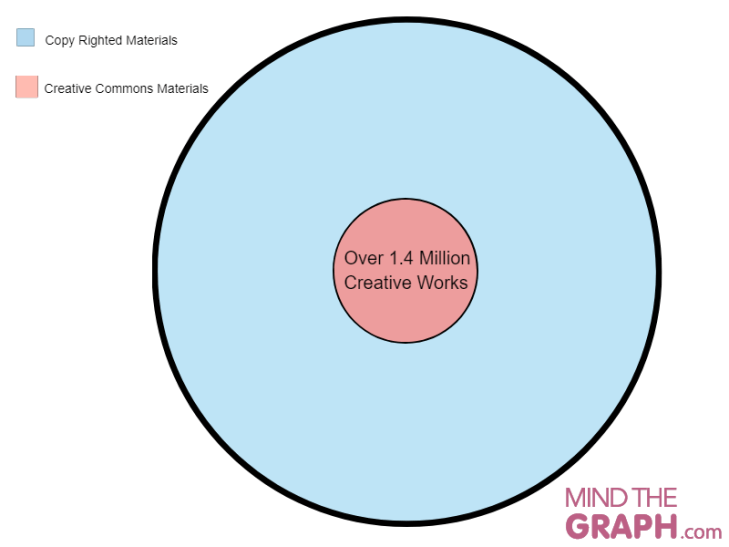
Dr. Tindall’s Attempts at the Creative Commons Assignment:


Continue reading →

Notes for today’s COMM 1321 class

Activities for today’s class

Part 1: Select three of the Business Keywords you are knowledgeable about.

Part 2: For each topic, create a thesis statement.

Part 3: Then apply the rules for the main points from this chapter to write two to five main points you would cover in delivering a presentation relevant to your thesis. Express each main point in a complete sentence.

Part 4: Prepare an introduction and a conclusion for the topics you developed.

Part 5: Then, exchange your paper with a classmate. Use the checklists for the introduction and conclusion found on p. 281 (Self-Assessment: Checklist of Organizing a Presentation)** to review each other’s introductions and conclusions.

** In case you don’t have your book, here is the checklist:

Does the introduction

  1. Capture the attention of your audience?
  2. Give your audience reasons to listen?
  3. Set an appropriate tone?
  4. Establish your qualifications, if necessary?
  5. Introduce your thesis and preview the content?

Does the body

  1. Use the most effective organizational pattern?
    1. Chronological
    2. Spatial
    3. Topical
    4. Cause-effect
  2. State your main points in complete sentences?
  3. Use your main points to develop your thesis?
  4. Contain no more than five main points?
  5. Express only one idea in each main point?
  6. State your main points in parallel strucutre if possible?

Do you have transitions that

  1. Refer to both recent and upcoming material, showing relationships between the two?
  2. Emphasize your important ideas?
  3. Clarify the structure of your ideas?
  4. Exist in all necessary parts of the presentation?
    1. Between introduction and body
    2. Between main points within the body
    3. Between body and conclusion

Does the conclusion

  1. Review your thesis and your main points?
  2. Conclude with an effective closing statement?


Class Slides: https://drive.google.com/file/d/192ltIrhNVP-shHbsrO8j0H9iTgyYGENA/view?usp=sharing


Notes for Monday’s PR Writing (COMM 3362) Class

Announcements
AdFed trip to Houston

AAF-H STUDENT CONFERENCE & COMPETITION 2018

REGISTRATION: OCTOBER 26, 2018

HOTEL RESERVATION: OCTOBER 11, 2018

Friday, November 2, 2018 8:00 AM
Saturday, November 3, 2018 1:00 PM
Houston Marriott West Loop by the Galleria
1750 West Loop S West Loop South Houston, TX 77027 (map)

College students from across the region compete to create the best ad campaign for a sponsor/donor. Apply for this year’s conference! Applications open.
PRSSA

Guest Speaker
Stephan Malick on portfolios

Review Chapters 1 and 2 through current events
1. From Introduction: “ocial and digital media can be a lot of fun, but this is an industry that requires a lot of creativity, scientific research, and writing. Writing is probably one of the most important roles we have to invest in for social media and digital media. We have to embrace not only our own brand voices, but understand how to write and present a voice that represents another brand across not just one platform, but many in a consistent manner. In addition, we have to be up to date with the latest trends, cases, and expectations the field and others expect of us.”

2. Chapter breakdown — strategic mindset approaches (Chapters 1-4), and types of content that could be created and executed creativity and strategically (Chapters 5-10). — strategy and content
3. Differences between PR, marketing and advertising
4. Key questions to consider:

  • What is our voice when we are writing content?
    What is the current voice that is coming through our traditional media components, and how similar (or different) is it? Is it our personal voice coming through, or are we doing the brand justice and writing in their voice based on their own attributes, characteristics, and relationships within the industry.
  • Why are we writing? Is it just because “it’s there?” Or is there a goal in mind?
    There needs to be an investment and overall purpose for why we want to create content to share and disseminate with our audiences. It is to tell our story and those who are in our community? Do we want to become a resource for our industry? Do we want to create awareness about a core issue or initiative we are a part of?
    How is our content (traditionally and emerging) doing?
  • Do people like it? Are they sharing it? What are some things that have been working for us? What has not been working? By tying in research (another important element that needs to be integrated with emerging writing practices) can tell us which pieces of content are being received well, and which ones are not.
    (Show Facebook page for Department.)
  • How do we make the changes necessary to continue to stay relevant for the industry? Discuss extra credit for Cision, HubSpot, and Hootsuite certification programs.

Now let’s talk about ethics and legal. Go to Chapter 2 in TopHat.

  • What surprised you?
  • Given what you read, have you seen anything that may have violated DMCA, copyright or trademark?
  • What’s the difference between ethics and the law?

In class assignment: Explore the ethical implications of a current social media issue or recent situation. The issue could be one of these:

Create a social media policy that will help organizations apply ethics in day-to-day social media management.

Assignments
Intro Creative Commons with two memes: Colin Kapernick ad and Khloe Kardashian controversy

  • Creative Commons Do-It-Yourself Homework Challenge: Choose two of the following: a one-age handout, two to three-minute video, inforgraphic, and/or website (created using Adobe Spark) that you could use to educate public relations students about the Creative Commons system. Decide which license you will use. Use and remix CC materials. Publish your document online with the Creative Commons license of your choice and send the link to Dr. Tindall. Due September 17.

Now, extra credit:

Extra Credit Assignment: State of Strategic Communications. Research and present the overall state of strategic communications. Choose a visual format to share your insights and research on this topic. Example formats can include an infographic, video, storyboard format, Instagram story, etc. Due September 17.