Notes for March 3, 2016 JOUR 2500 Class

I’m too lazy to go to my D2L Brightspace page, so here are my notes / videos for class:

http://www.langerqual.com/QRCA-video/

http://www.eiu.edu/ihec/Krueger-FocusGroupInterviews.pdf

https://www.youtube.com/watch?v=ZLw0YXcseG0 — Derby Focus Groups

Strength/weakness of focus group: https://www.youtube.com/watch?v=XA2Eo1ggkjc
st ives https://www.youtube.com/watch?v=XrDg_29Id4M

v
https://www.youtube.com/watch?v=yug-OJnVXWg

Focus Group and Interview Presentation: https://docs.google.com/presentation/d/1VGiwLBtBlxsLPTfstq6shZTugeFg5WjTEWKHiIpUvdo/edit#slide=id.gd8b01f297_0_5


Notes and Videos for Today’s JOUR 2500 Class

Pay no attention to this post, dear reader. (Hi, Mom!) These are videos I have to show in class and/or give to students.

Wrong: https://www.youtube.com/watch?v=U4UKwd0KExc
Right: https://www.youtube.com/watch?v=eNMTJTnrTQQ

Humans of NY: https://www.youtube.com/watch?v=KPxzlGPrM3A

asking good questions (TEDx); https://www.youtube.com/watch?v=PkcHstP6Ht0

How journalists can become better interviewers: http://www.poynter.org/2013/how-journalists-can-become-better-interviewers/205518/

Hashtags and activism report: http://www.cmsimpact.org/blmreport

I’m teaching PR Techniques this summer session: https://www.gosolar.gsu.edu/bprod/bwckschd.p_get_crse_unsec

T/R 01:50 pm-04:20 pm (hybrid class–I will hold online and offline sessions)


PRDiversity: The Keys To The Kingdom

[This post previously appeared Feb. 22, 2016, on the PRSAY blog.]

One summer, I was a visiting professor at a well-respected, hip, and award-winning advertising agency in New York City. My rotation with executives and teams was great until the day I met her. The memory of the experience is faded and fuzzy, but her sharp tone, derisive comments about my university and training remain vividly sharp.

She was an older, white woman whose role was to craft client strategies. As I sat down to speak with her in her office decorated in sparse colors, art books with classical music in the background, she asked me questions about my work and research before hitting me with a stunning statement. “Oh,” she said after hearing the name of my university and where it was located. “I would never hire students from there. I find that liberal arts students from Harvard and Princeton are better critical and creative thinkers in this industry.” She proceeded to tell me why she valued students from ivy-covered, long-established universities over students from state schools (students like me and my students). I bit my tongue until I tasted the coppery taste of blood and could not wait until I could exit the office.

Every time I passed her office, she was holding court with her anointed heirs. Like all those who practice homosocial reproduction, they were all white, young white women who had degrees from universities with expensive price tags, ivy-covered brick walls, and Northeast addresses.

I always wonder how the woman I met in that NYC agency arrived at her decision. Why did she feel that way? Did she have proof that students from other universities were subpar? The questions pummeled my brain from that point on that clear, sunny day to today. Those questions popped up again when I watched this TED Talk on hiring. What struck me was my own implicit bias toward the striver or as the speaker states “the scrapper.” I will always root for the gritty, determined “scrapper” without the refined, perfect resume but has yards of perseverance, energy, creative hustle, and enthusiasm. I see myself in those students, many of whom do not look like me but they have the same drive.

I was just like the woman in that ad agency office. I had partiality and prejudice toward certain types of people. Yet, there was one spectacular difference between the two of us. I did not have the power to hire anyone into the industry. She did. She held the keys to the advertising kingdom, and she was a gatekeeper that could usher young graduates into those venerable walls that I only breached because I was a faculty member in a special program.

In the industry, we make a lot of noise around diversity at certain times of the year. This month—February and Black History Month—is one of those times. For all the squawking and chattering about identifying and retaining diverse candidates, there is very little talk about the cognitive biases that influence who gets into the candidate pool and who is able to get the job. Talk is easy. Talk is convenient. Talk is politically correct. Addressing the implicit biases and hidden preferences of hiring managers is difficult. Admitting that you have these biases is a charged conversation. As the University of Oregon’s HR website notes, we all have implicit biases.

Even more difficult is finding ways to lessen or rid organizations of those blinders. This Fast Company article outlines steps that can be taken to change unconscious bias in the workplace.

Admitting and correcting the implicit biases in hiring isn’t a feel-good, talky metric that wins applause and awards. It is a solid strategy that can correct some diversity issues within the industry. It will take hard work that will require digging into the research literature and consulting with people who work in this area. It will take effort beyond the diversity workshops. It will lead to uncomfortable conversations, refreshing silences, and difficult reflexive moments, and the rewards are not the quick wins that come with a diversity ad or a thought leader blog post. As someone once told me, “The tongue in your mouth has to align with the tongues in your shoes.” You have to walk your talk. Fixing the pipeline issues won’t happen without wrestling with the biases held by those who hold the doors of opportunity and talking about the experience.

Now isn’t the time for more trivial platitudes and banal chatter. Now is the time for action and movement.

Brief Thoughts On Academic Isolation and Imagined Community

I am in a happy place. I never thought my happy place would be Gainesville, Florida, but alas it is. I have finished the day’s activities for frank(scholar), and I am able to decompress and think through what I have learned and done today.

I learned a lot. I did a lot. I tweeted a lot. And I realized a lot.

The biggest revelation: Being an academic in isolation sucks. (Sucks is a very technical and academic term. I know.)

Isolation is not a term I used lightly. The academic isolation in my department is a solitary, cloistered experience of being the sole person who studies and researches in my academic area. If you are within a journalism program, being a PR scholar makes you an easy target for ridicule, disgust, and animosity. The same holds true in the island of misfit toys and misaligned programs that I consider my department. I am not being overly dramatic. I know what my colleagues have said about PR, what they believe my students are, and what they perceive as content in the PR courses. What I do is not looked upon as something worthwhile; it is considered the dastardly must-have that those pesky undergraduates flock to. Puff Daddy said it best: It’s all about the Benjamins, baby. At my university, it’s all about the credit hours, baby, and the PR major churns out a lot of bodies and brings in a nice chunk of change. [See this blog post for more insight.]

My isolation isn’t like your isolation. Being the only student of color, of certain orientations, etc. can also be the cause of isolation. Finding your community physically can be hard because there is no one else who is doing what you do, looks like you, carries the same weights/burdens/joys of being that avowed identity. The beauty of social media allows us to find our imagined communities. For me, Twitter has been an academic lifeline that allows me to connect and interact with scholars of color and my #prprofs. Because I am privileged as a tenured professor (and before that, a tenure-track professor), I can attend conferences in relative comfort, and in those places I can meet up with scholars who get what I do, do what I do, and just know the experiences I have.

Today was one of those days. I reconnected with people. I met new people. I found a new tribe. At least for today, I don’t feel isolated. I felt like I was a part of something great, grand, moving, and inspiring. One of the most important things that occurred today was meeting in person scholars who I have met or collaborated with virtually and meeting students who are excited about public interest communication. Being in a room with 30 scholars in a TED Talk like experience was a riveting and exciting experience in an otherwise dull research existence that I have. As someone who is isolated by discipline and scholarship in my home department, it is pleasant to be in the company of people who do similar work, are passionate about the same concepts, and desire to make and activate social change.

College Internships With Atlanta Shakespeare Company

College Internships With Atlanta Shakespeare Company

Application Deadline: March 4th, 2016 at 11:59 p.m.

Qualified applicants are college undergraduates currently studying acting, directing, theatre education, or similar majors. Interns will assist in many areas of theatre administration and education, mostly centering around ASC’s two summer student programs: Shakespeare Superheroes for students ages 4-13, and Shakespeare Intensive for Teens for rising 9th grade through rising college freshmen.

Intern responsibilities may include stage management, office administrative duties, junior teacher/camp counselor jobs, assistant directing, rehearsal assistance and numerous other jobs around the Tavern.

Interns will be offered a modest honorarium.

Full description and all information is on our website www.shakespearetavern.com under education and internships.

No audition is necessary, but persons interested should electronically submit their acting/performance resume and professional work resume, along with a one-page letter of interest/intent, and two letters of recommendation: one from a high school or college Theatre or English teacher as well as a letter of recommendation from an employer.

We will conduct interviews with applicants at the Shakespeare Tavern Playhouse from 11-6 on Friday March 11, 2016 and Saturday March 12, 2016. Qualified applicants accepted for an interview can also be interviewed by Skype if necessary.

All applicants who are invited to interview will be notified with our final decisions by April 1st, 2016.

We encourage all applicants to fill out and submit the ONLINE form. No snail-mailed applications can be accepted without first contacting samantha@shakespearetavern.com.

Complete information, online form link and FAQ at our website,www.shakespearetavern.com, education page, internships.

Soft Skills, Hard Lessons

Last week, someone called me an elitist.

Mind you, I had an earlier kerfuffle with the same person about directions to my office and where to park in downtown Atlanta, and I think that colored our perceptions of each other and  the later conversation.

I was called an elitist during a conversation about curriculum change. She believed I was an elitist because I said that (a) we have too much to teach in our own curriculum to attempt to layer another thing to what we currently do, (b) that students should play their own part and role in learning about etiquette, business skills, and other soft skills, and (c) that we should direct students to campus PRSSA and Ad Club for training.

My esteemed colleague said that (a) I was an elitist, (b) that my recommendation was elitist because students couldn’t afford those activities, and (c) that they don’t know what skills they are missing.

At the moment, we were pressed to move on to point #3 of the 11-point agenda. I channeled classic Jay-Z and did what the Notorious HRC did in this photo: brushed that dirt off my shoulder.
clintonbrush2_xhrlua

After a cocktail, dessert, and a good night’s sleep, I thought about that moment and that accusation, and the following questions popped up in my head.

  • What can we offer PR students beyond the book learning?
  • Is it too much of an expectation for professors to teach students every hard skill, soft skill, and theory involved in the practice?
  • Why do professors assume that all students don’t know or aren’t clued into business etiquette? Why do we assume that just because students attend certain universities and fit certain demographic profiles that they cannot afford to participate in certain activities? (As a former campus adviser to several organizations, I can attest that people hustle up the money and pay for the things they want to do.)
  • What are the expectations for professional student organizations?

I don’t have all the answers. (If you have some suggestions or ideas for these questions, drop them in the comments below.) But I have a partial answer to the first question. The question led me to theory, in particular social cognitive theory. As Bandura (1977) stated:

Learning would be exceedingly laborious, not to mention hazardous, if people had to rely solely on the effects of their own actions to inform them what to do. Fortunately, most human behavior is learned observationally through modeling: from observing others one forms an idea of how new behaviors are performed, and on later occasions this coded information serves as a guide for action. (p. 22)

Bandura, A. (1997). Self-efficacy: The exercise of control. New York: W.H. Freeman.

As the architects of instructional design within our classrooms, there is merit to this. Bandura’s social cognitive theory rests on the ideas of imitation, modeling, and reinforcement; rather than telling people what to do, we show them how to act through our actions and behaviors. Those people then copy that behavior.  Cue the Bobo doll experiment. With positive encouragement, these actions can be repeated time and time again.

How could this work in an overtaxed PR classroom?

It could work in a myriad of ways. For example, email communication could be a stand-alone module, replete with videos, lecture notes, slide shows, and such. Or a professor could model appropriate email communication, detail her/his/their expectations for professional electronic communication in the syllabus, and hold her/his/their students to a high standard for the quarter/semester/intersession.

Another example is the introduction of teamwork into the class. Mention the word “teams” in classes, and students will thrash about and foam at the mouth, moaning and groaning about how they hate teams, detest working with other people, et cetera.

Most have never been told how to work within a team or how to handle conflict within teams. Instead, professors and instructors forced them into groups with zero expectations and boundaries. I built a teamwork module that I use in my campaigns classes within the first three weeks of the semester, and I model for them team behaviors as well as walk them through the strategies for building a strong team culture and dynamic. That shifts the atmosphere from a toxic, “I hate teams” mentality to a moderate, “Let’s see how this works” mindset. I follow up with positive and negative reinforcements for the behaviors I witness. Teams that are working together and addressing conflict appropriately get rewarded with praises and points.

Teaching the hard skills is an easy task, but teaching the softer and finer points of life beyond the textbooks is difficult. When teaching our students, we have to go beyond the large concepts, the great historical figures, the GPS testing, and the critical thinking skills. There is a lot to cover in the strategic communication classroom; I do think that we as professors can stretch to teach our students hard and soft skills. I do this regularly in my classes, but I rarely force those skills into formal lessons or modules. I sprinkle in business etiquette and professionalism into the class during the 16 weeks I have those students. It is my belief that we as professors have to give my students life lessons that will ease their transitions into the advanced classes, internships, relationships, and the job market.

Job Opportunity: Community Engagement Coordinator, The Feminist Women’s Health Center (Atlanta, Ga.)

Job Announcement

Community Engagement Coordinator

REPORTS TO: Community Education & Advocacy Manager

The Feminist Women’s Health Center provides accessible, comprehensive gynecological healthcare to all who need it without judgment.   As innovative healthcare leaders, we work collaboratively within our community and nationally to promote reproductive health, rights and justice.  We advocate for wellness, uncensored health information and fair public policies by educating the larger community and empowering our clients to make their own decisions.  www.feministcenter.org

Responsibilities include:

  1. Recruit, motivate, and engage supporters, interns, and volunteers into grassroots advocacy activities; training, intern, and volunteer programs; special projects, and committees.
  2. Proactively identify and encourage growth and leadership opportunities for volunteers including developing internal programs to provide training, education, and recognition to volunteers.
  3. Strategically align volunteer and intern skills, talents, and availability with organizational needs.
  4. Assist with identifying key constituencies or community partners and cultivating partnerships in support of reproductive rights, health and justice.
  5. Ensure and maintain timely data input of volunteer records in email list serves, database, etc.
  6. Plans and implements volunteer engagement activities such as weekly advocacy days (Jan-April), volunteer nights, film forums, phonebanks, trainings, tables, events, and other activities.
  7. Trains volunteers and supporters on the advocacy process, tabling & outreach, reproductive rights, health and justice issues, grassroots fundraising, etc.
  8. Represents FWHC (as well as other team members) in legislative coalitions, community events, tables, speaking engagements, and other functions as deemed appropriate by Supervisor.
  9. Write up-to-date content for websites, alerts, volunteer listserve messages, action kits, etc.
  10. Supervise organizing & outreach Interns and administer the internship program components.
  11. Assist Supervisor to ensure that department fundraising goals are met, including coordinating volunteers on grassroots fundraising events and working on volunteer-related grant proposals.
  12. Work with other staff and volunteers of the Health Center to coordinate activist, volunteer, and supporter recruitment and mobilization, with support from other CEAN staff.
  13. Organize, guide, and grow all new and existing activist volunteer committees of dedicated, highly motivated and skilled volunteers who have a particular interest and aptitude as needed (i.e. Legislative Advocacy, Event Planning, health education, community outreach, etc.), with support from appropriate team members.

QUALIFICATIONS:

  • Bachelor level degree preferred. Two or more years of relevant work experience is required.
  • Understanding of and commitment to reproductive health, rights, and justice issues is required.
  • Familiarity with leadership development, volunteer coordination, or community organizing required.
  • Must have excellent organizational skills, including computer skills. Attention to detail is a must.
  • Must have excellent communication and interpersonal skills, including written skills. Public speaking ability or facilitation experience preferred.
  • Ability to work independently as well as collaboratively, manage multiple, simultaneous projects and meet deadlines.
  • Ability & willingness to accommodate a flexible schedule, including some nights & weekends.
  • Must have access to a reliable automobile and a driver’s license.
  • Upbeat, positive, personable, and ability to relate well with diverse people and age groups.

Please submit a COVER LETTER and RESUME to: Feminist Women’s Health Center · 1924 Cliff Valley Way · Atlanta, GA  30329

Fax:  404-417-0878 or Email: jobs@feministcenter.org

Feminist Women’s Health Center is an Equal Opportunity Employer


Advice for Student Writers: Writer’s Block Is Real

Calvin and Hobbes


Writer’s block is real. That’s all. Writer’s block can only be overcome by writing. As Anne Lamott wrote in Bird by Bird [affiliate link], “writing is not rapturous. In fact, the only way I can get anything written at all is to write really, really shitty first drafts.” Let this be an encouragement to you, dear student writer. Write really, really bad first drafts. You won’t be able to edit a blank page, so put some thing down on those pages. Write in winding, disjointed, and meandering sentences. Write out all the things you need to. Write something awful, but at least write. Then you have to revise that into something meaningful and beautiful. Turn in the revision (maybe your third or fourth revision) later in the semester.

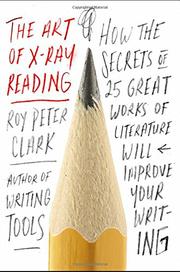
Writing Notes: The Art of X-Ray Reading

9780316282178.jpg

[This post contains affiliate links, which means that if you click on one of the product links, I will receive a small commission.]

When Roy Peter Clark writes something, I pay attention. Clark is a writing coach and senior scholar at the Poynter Institute, and his advice on writing is poignant, clear, and helpful for anyone who has to sit down and bang out a message. I am still meandering through his latest book, The Art of X-Ray Reading, but I skipped to the back to get the 12 steps for being an X-ray reader.

“Why is reading important to a writer?” Many students and potential authors ask this question. “I just want to write.” You can’t just write. A writer has to be immersed in the genre he or she is writing. They have to know good prose, be able to identify what works and doesn’t work, and pinpoint the rhythms and voice needed for the particular piece. Writing just doesn’t happen. It takes practice, and part of the practice is writing. As a devotee of Stephen King’s On Writing, he makes it clear what the task of the writer is:

Can I be blunt on this subject? If you don’t have time to read, you don’t have the time (or the tools) to write. Simple as that.

Reading should sharpen your mind per Ray Bradbury (via Brain Pickings):

In your reading, find books to improve your color sense, your sense of shape and size in the world.

Melissa Donovan summed up the connection this way:

“To write well, there are only two things you absolutely must do: read and write. Everything else will flow from these two activities, which are essentially yin and yang. Without each other, reading and writing cannot exist. They rely on one another. They are two parts of a greater whole.”

“But how do I read?” The reading that is done as a panicked, rushing student isn’t the same reading that you have to do when you are reading as a writer. Writers must go deeper than the normal information scanning routines to look at the marrow and skeletal structures of the writing.

Clark gives some rules that any writer, nonfiction or fiction oriented, can use to strengthen their reading and eventually their writing:

  • Read. Simple enough, right? To write well, one must be exposed to all types of writing. Dig into white papers, novels, comic books, microfiction, and long-form nonfiction.

It’s 1998, and Luther Campbell walks into a party on Key Biscayne. If this were a romantic comedy, now is when everything would switch to slow motion as a Lisa Loeb song fades in.
He notices Khaled almost immediately. Even at an industry party for radio professionals, which this is, Khaled stands out, Campbell remembers.
Keep imagining this in slow motion. It’s sexier that way.
Khaled is frantic, breaking into songs to scream at anyone who dares stand still. He bounces on the balls of his feet, shifting from left foot to right like a cocky fighter, mixing an odd cocktail of Jamaican dancehall and hip-hop as sweat beads on his forehead.
It is pure energy, almost at dangerous levels. Some doctors might have diagnosed it. Uncle Luke wants to bottle it. “He had a mouthpiece on him, man,” Campbell says. “So much energy.”
But let’s back up a bit. You can stop the whole slow-motion thing now.
Read these showstopper passages again. This time do it slowly.

  • Identify the part of the passage that you like the best. In the above passage, I loved the mix of contradictory references (bespectacled Lisa Loeb paired with First Amendment defender/booty music pioneer Luther Campbell) and the vibrant metaphors. I have been to that type of party. I have seen people dance like that. I can also smell the Jamaican patties, rum punch, body oils, and cannabis all under the night stars. Yes, that imagery put me in the location.
  • Read that section aloud.
  • Circle the paragraph and make descriptive notes about why it interests you.
  • Ask yourself, “How does the writer do this?” That’s a good question, and I looked through the article again. The writer’s tone and voice was set in paragraph one. It is clear he is a patient observer of things, places, and people. One has to be to make the connective tissues of this piece–the strong metaphors, the vivid imagery, the deep insight into the Miami music scene, and the sheer humor–work.
  • Duplicate the passage and save it in a journal or file. (One of my graduate professors said that she copied by hand journal articles of her mentor so she could understand the structure, composition, and language of his writing and arguments. It worked. She writes flawlessly.)
  • Don’t imitate the text. Let it be an indirect influence on your personal writing.